
Designing for a better future
ALUMNA NICOLE MESQUITA-MENDES EXPLORES DIVERSITY AND WELLBEING IN ARCHITECTURE

Designing for a better future
ALUMNA NICOLE MESQUITA-MENDES EXPLORES DIVERSITY AND WELLBEING IN ARCHITECTURE


When Nicole Mesquita-Mendes started her degree in architecture at Bond, she had one goal – to leave the world a better place. At just 24-years-old, she’s already having a global impact, with her research exploring ‘designing for super diversity’ presented internationally and her advocacy for the wellbeing of architecture students earning national recognition.


In her first year at Bond University, Nicole discovered a quote by renowned American architect, inventor and philosopher, Buckminster Fuller, that’s proven formative: “The best way to predict the future is to design it”.
“We have the ability to influence the future, we have agency and our actions, no matter how big or small, can have impact,” she says.
It’s a philosophy Nicole has carried through her work, whether considering the complex challenges of shaping cities where diverse cultures can thrive, helping students navigate the pathway to an architecture career, or envisioning precincts people will love.
Creating communities for all to coexist
Born in Kenya, raised in Australia, and shaped by her Goan heritage and cross-cultural exchanges, Nicole developed a curiosity about how culture and power shape places. It sparked her desire to research ‘designing for super-diversity’ during her Master of Architecture and Master of Project Management at Bond.
“With our globalised society, there's an inevitability that migration will increase due to wars, economic imbalance, and climate change,” she says.
“It's estimated around 1.2 billion people will be displaced by 2050. We really need to be asking ourselves, how can we coexist together?
“Australia is a multicultural society and there's a lovely richness that comes from different people living together, but migration isn't without its challenges and that’s what my research set out to navigate.”
Transcultural thinking
Nicole says challenging the way we view migration is the first step. “Multiculturalism, while progressive and supportive of the coexistence of different ethnicities, still views culture through a separatist and colonial lens,” she says.
“My research suggests a transcultural approach may be better suited to supporting super diversity. Transculturalism acknowledges culture is continuously changing and cultural phenomena are inherently interconnected, meaning no single culture can exist in isolation.
“Similarly, architecture doesn't exist in isolation, it is more than just built form. It's place, a process, and an exchange. It’s the activities a place facilitates, and the governance structures that allow people to feel at home within it.”
Nicole acknowledges, while not a new discourse, it’s an evolving one.
“More practices are adopting co-design and community engagement, exploring the relationship between architecture and community participation,” she says.
“It’s the combination of architecture, participation and governance working together that creates places where people feel they belong.”

International influence
Nicole presented her research at the UIA2024KL International Forum: DIVERSECITY in Kuala Lumpur, Malaysia, in November 2024.
“People came from all over the world — Zimbabwe, India, Brazil, Singapore, France, the United States and, of course, Australia. It was nice to be able to embody the super diversity I was talking about,” she says.
“As one of the younger voices among established professionals I brought my own perspective, but it was inspiring to be able to talk to the people pioneering globally in this space, and to make some new friends.”
As part of the conference, her paper “Designing for Super-Diversity: Transcultural Identity, Participation and Place” was published in the Malaysia Architectural Journal.

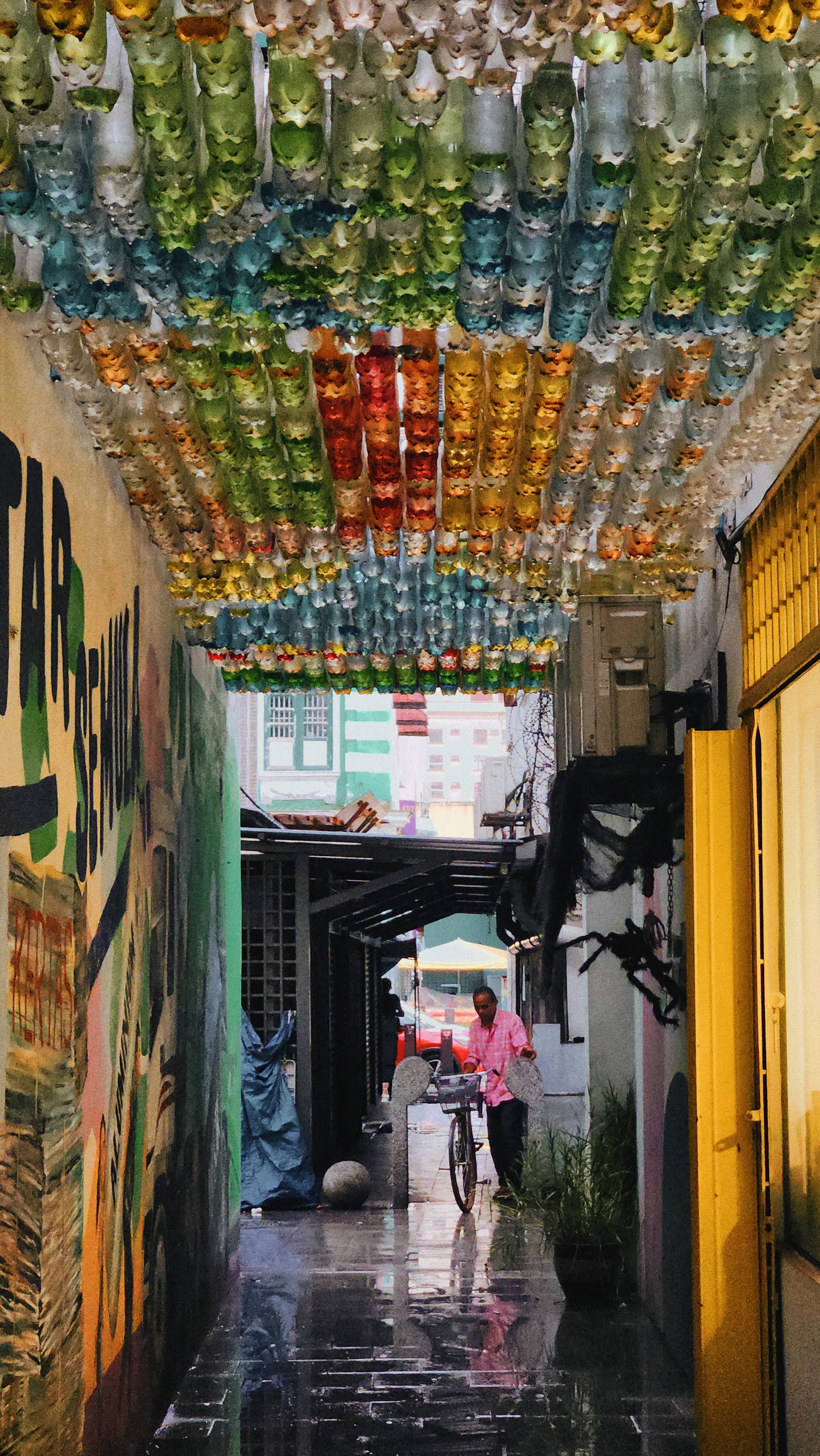
Nicole's trip to Malaysia.
Nicole's trip to Malaysia.

Nicole's trip to Malaysia.
Nicole's trip to Malaysia.
International influence
Nicole presented her research at the UIA2024KL International Forum: DIVERSECITY in Kuala Lumpur, Malaysia, in November 2024.

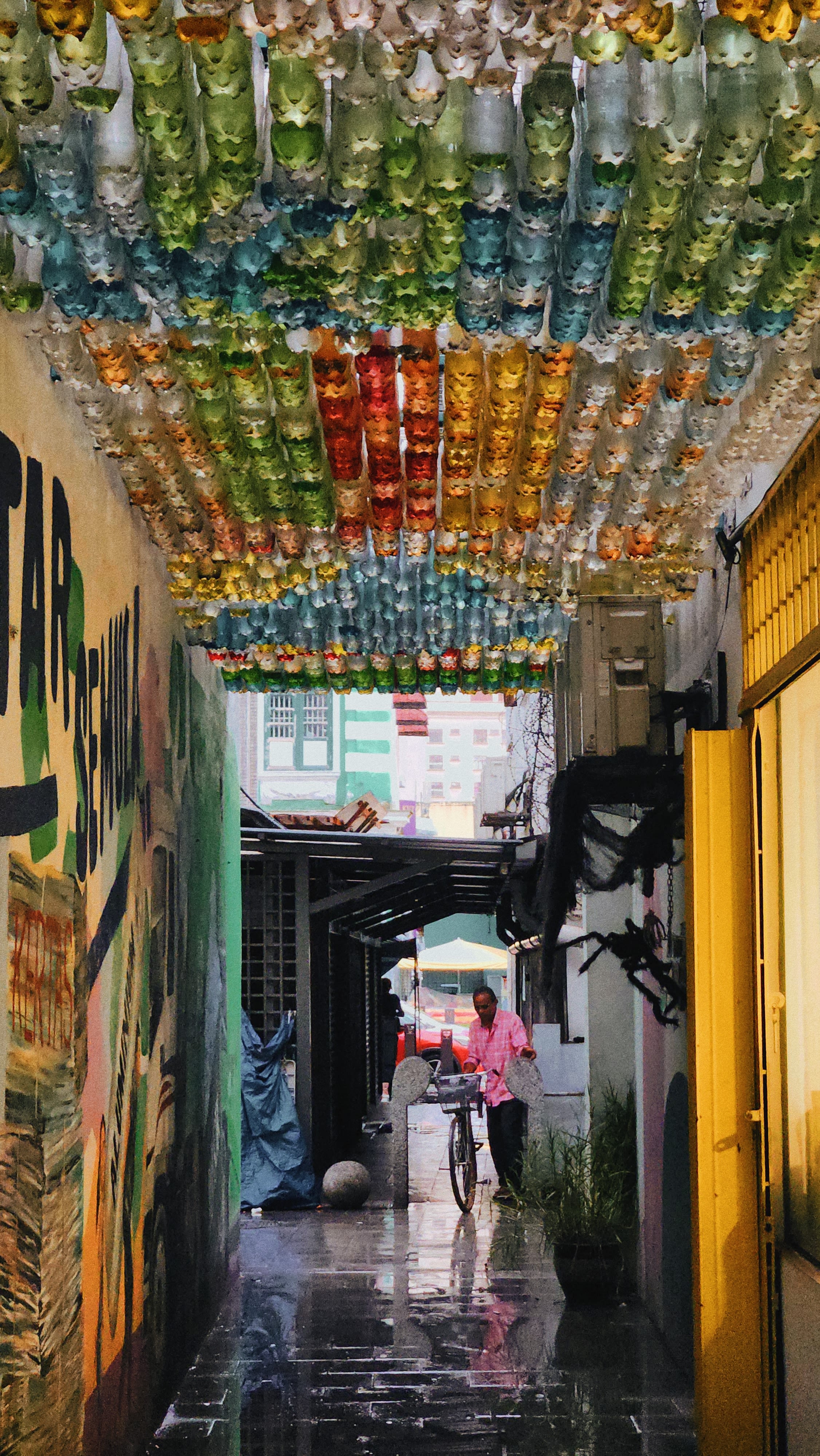
Nicole's trip to Malaysia.
Nicole's trip to Malaysia.
“People came from all over the world — Zimbabwe, India, Brazil, Singapore, France, the United States and, of course, Australia. It was nice to be able to embody the super diversity I was talking about,” she says.
“As one of the younger voices among established professionals I brought my own perspective, but it was inspiring to be able to talk to the people pioneering globally in this space, and to make some new friends.”
As part of the conference, her paper “Designing for Super-Diversity: Transcultural Identity, Participation and Place” was published in the Malaysia Architectural Journal.
An advocate for wellbeing
It’s not the only recognition Nicole has received. Her work as part of the Student Organised Network for Architecture (SONA) — the national student-membership body of the Australian Institute of Architects (RAIA) — also turned heads.
While studying at Bond, Nicole advocated for mental health and wellbeing in architecture, tackling the industry’s ingrained culture of ‘all-nighters’ and overworking. She helped lead a nationwide survey in 2020, which was expanded and repeated in 2022, going straight to the source for the data needed to push for change — asking architecture students about their experiences.
“We presented our Wellbeing of Architecture Students report at the 2022 RAIA Lost Opportunities Symposium,” Nicole says.
“Sharing a program with Pritzker Prize winners (considered the preeminent international architecture award) was daunting at first, but it was encouraging to see the profession genuinely engage with what we had to say.
“As a result of that, we were invited to share the findings of our 2022 survey at the Wellbeing of Architects Symposium in 2024.”


Nicole joins the 2022 RAIA Lost Opportunities Symposium.
Nicole joins the 2022 RAIA Lost Opportunities Symposium.
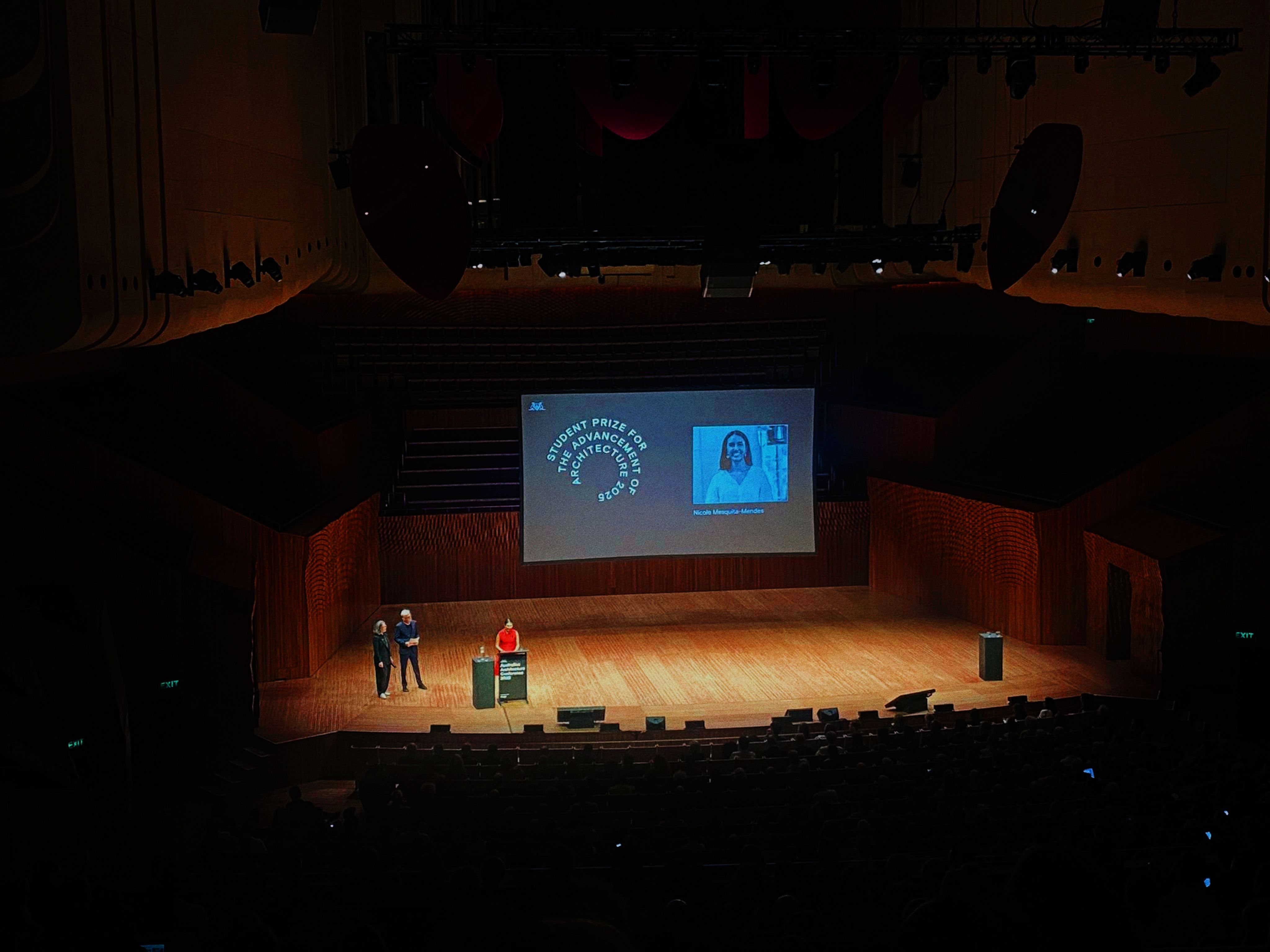
The research demonstrated the benefits of accessible mental health services at university and the importance of communication and empathy, but Nicole says the greatest impact of the project was reducing the stigma around discussing mental health. Her wellbeing advocacy, along with her representation of the student voice and engagement with the community, earned her the 2024 Student Prize for the Advancement of Architecture from RAIA.
“It's humbling because it wasn’t something I expected. I saw a problem and was curious to see what I could do to help. It was validating to receive the award and to know I've made a difference in at least some small way,” she says.

Research into practice
Since graduating in 2024, Nicole has taken up a full-time position in the urban design team at multidisciplinary consultancy, Urbis, where she worked throughout her degree. She’s putting the lessons she’s learned into practice, designing mixed-use precincts and public spaces, predominately in inner-Brisbane and on the Gold Coast.
“The research I've done into super diversity is always in the back of my mind and shaping my decisions,” she says.
“Even though I'm still early in my career, I'm grateful to be involved in the whole design process, from inception to visioning workshops, and then into design development, visualisations and community consultation.
“Throughout the process there’s a big focus on understanding what the challenges are from a range perspectives and collaborating across disciplines to find solutions.
“This means we have an informed set of insights that ground the projects in real world outcomes, creating places that are inclusive, resilient and loved.”
The future
While Nicole says architecture is constantly changing, challenged by evolving technology and market forces, one core theme will continue to ring true.
“It’s critical we design and act with empathy, relationality, and care,” she says.
Published on Wednesday, 19 November, 2025.

Original thinking direct to your inbox

Stories from Bond