
Robot revolution
World-first tech put students at the cutting edge
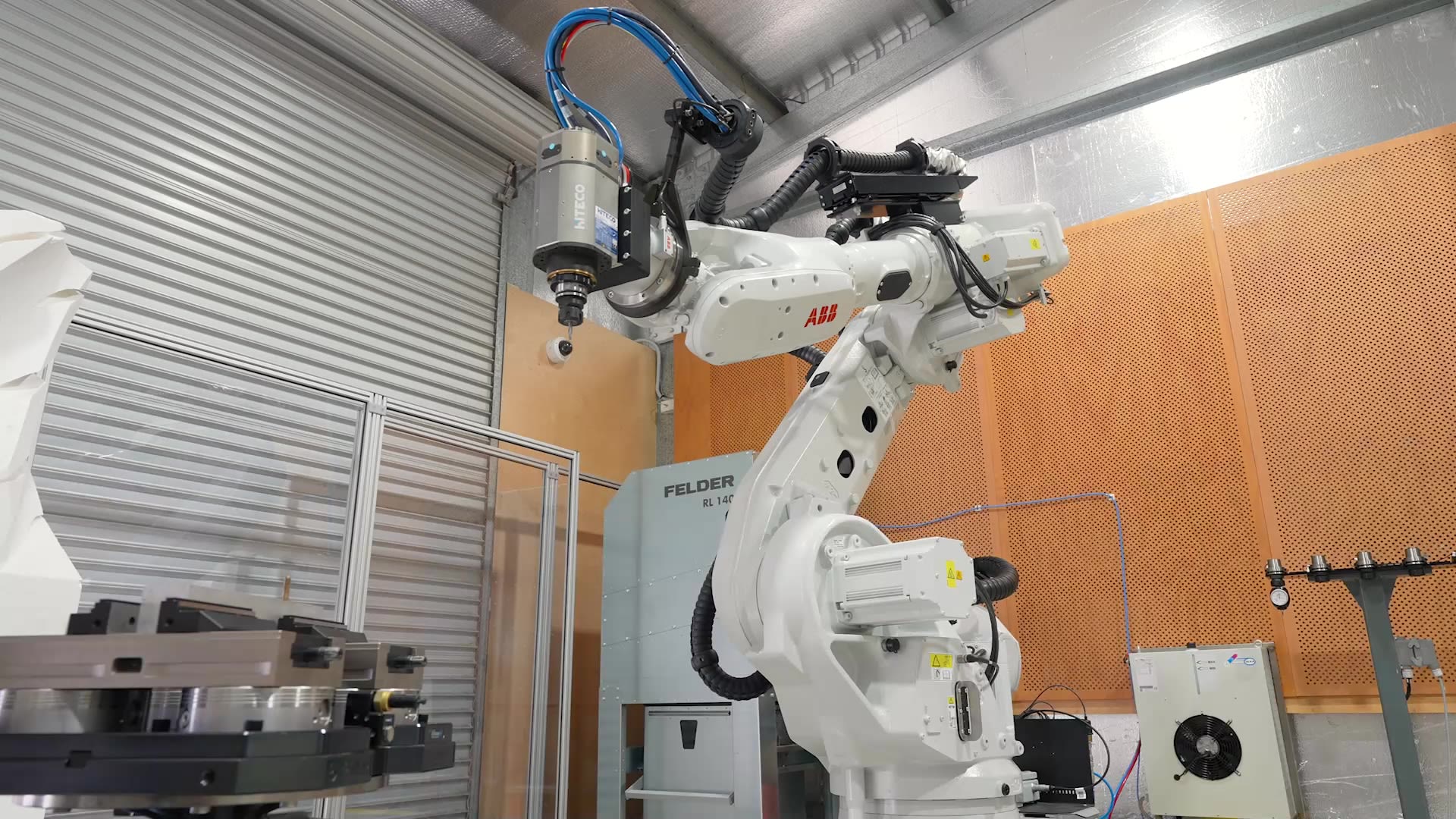

Bond University’s new ABB robot brings industrial-grade precision to student design, turning ideas into reality.


It’s powerful, precise and slightly unnerving to watch in motion. With the finesse of a master craftsman – albeit one that can lift 200kg with a single arm – Bond University’s new ABB robot goes about its work with a quiet whir.
The robot is the first of its kind delivered to Australia and the only one in an educational institution worldwide. At Bond, it brings students’ and researchers’ designs to life with industrial-grade precision, pushing the boundaries of construction and architectural innovation. Head of the Abedian School of Architecture, Professor Paul Loh, says the robot will underpin several new subjects.
“There’s a massive opportunity for human-robot collaboration,” he says. “Students are learning the workflows behind automation – not just pushing a button.”
Muscle and finesse
Housed in the Abedian School of Architecture’s FabLab and overseen by Ryan Wirth, the robot is both fast and highly accurate, with capabilities far surpassing those of previous generations.
“It’s honestly scary when it goes full speed,” Mr Wirth says. “Having this capability allows us to remain flexible and support a huge range of different projects and workflows.”

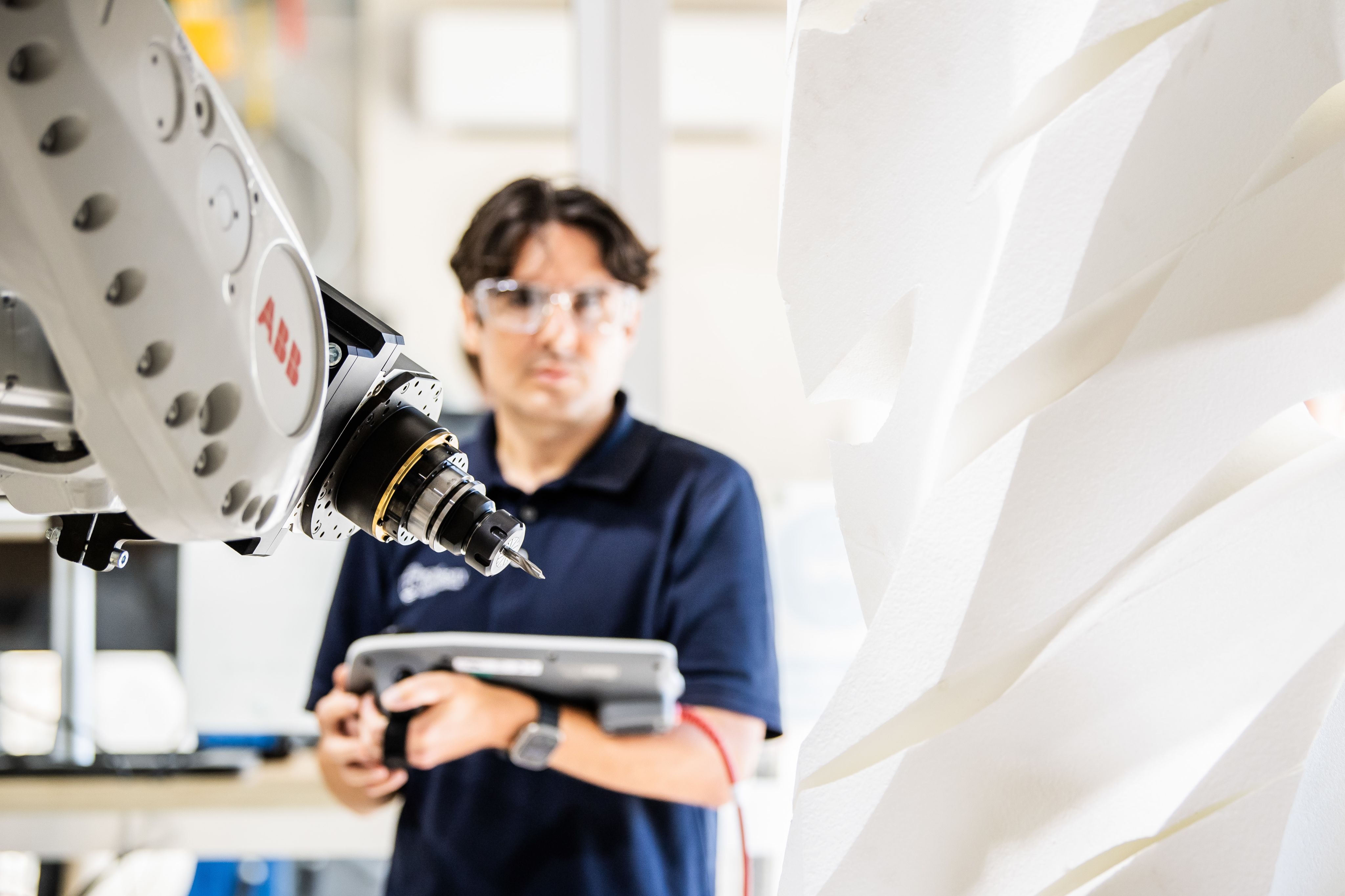
Ryan Wirth, General Manager of the FabLab at Bond University, operating the ABB robot. Picture: Cavan Flynn
Ryan Wirth, General Manager of the FabLab at Bond University, operating the ABB robot. Picture: Cavan Flynn
A force-control sensor allows the robot to physically ‘feel’ objects, while a quick-change system lets it swap between up to 20 unique tools for cutting, machining and drilling.
“Having access to this machine during an architecture degree gives students a huge advantage,” Mr Wirth says. “Similar types of robots are already used by manufacturers for plasma-cutting steel, laser welding, machining and more. “Working with them here lets students see exactly what these robots are capable of and really understand the interface between design and fabrication.”
Backing innovation
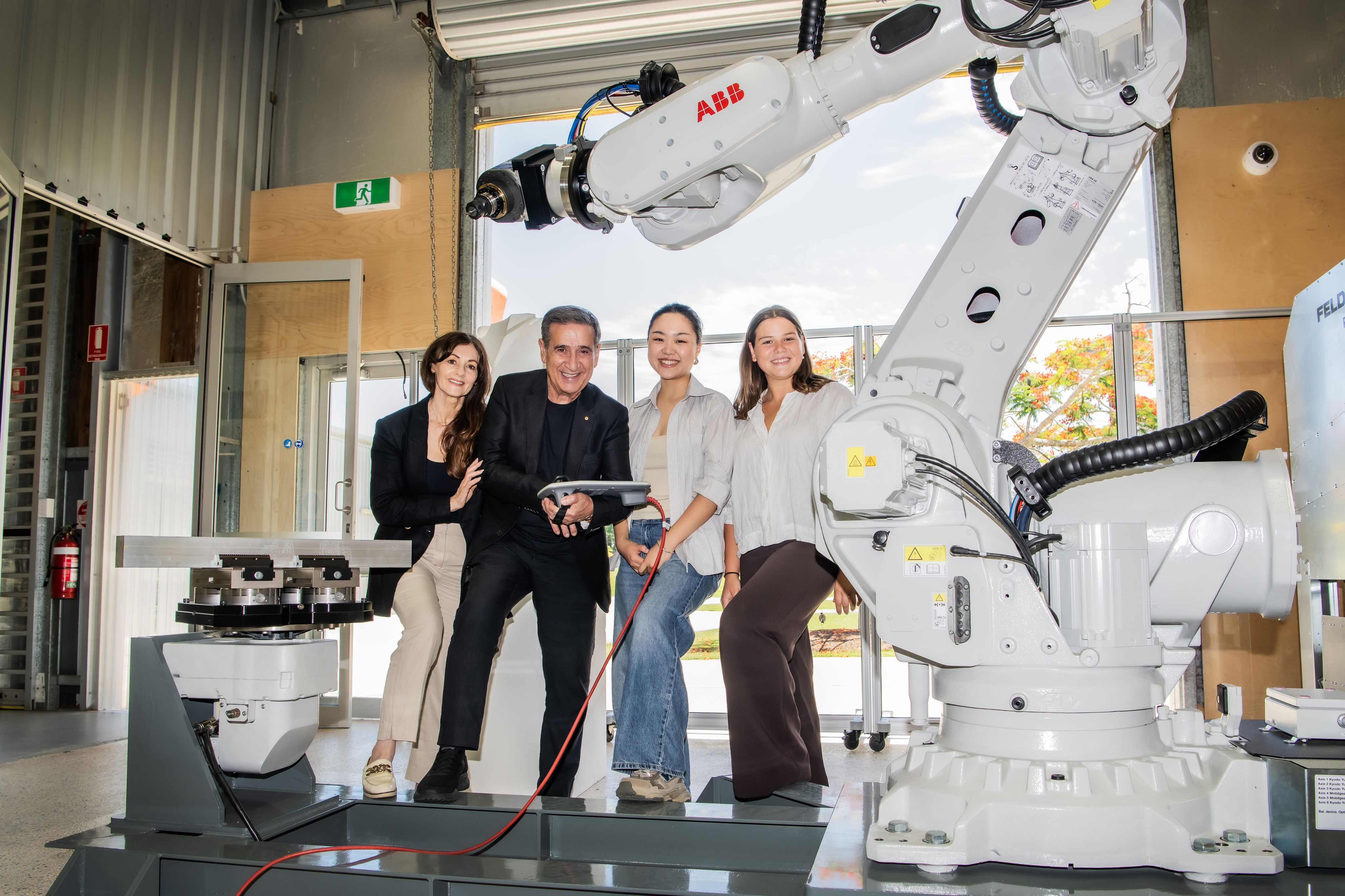
The robot was purchased with the support of Abedian School of Architecture patron Soheil Abedian AM.
The renowned Gold Coast developer says he hopes the acquisition will help cement the school as one of the best architecture programs in the world.
“In the fast-moving world of technology, the Abedian School of Architecture remains committed to our vision of architecture as an art form - creating and designing works that make the impossible possible through innovative tools such as the latest robotic arm,” Dr Abedian says.
“Technologies like this contribute to the advancement of the built environment, empowering the next generation of architects and designers with tools that will drive architectural excellence into the future.”
The man responsible for some of the city’s most recognisable landmarks, including the Q1 building, recalled his architecture professor was not so enthusiastic about technology in 1968.
“When I showed him my new Canon calculator, he took it, smashed it, and said, ‘It's not there anymore. Use your brain’. So what took us 10 hours, you guys are doing in 10 minutes.”
Designing for Brisbane 2032
Master of Architecture student George Hickman says hands-on experience with the technology has transformed how he thinks about design.
“To work with this tech team and to develop designs and see them realised through the machinery is amazing,” he says. “Having the robots makes you realise there's not a hard boundary between architecture and other design or engineering professions, there's actually this fluid relationship between them.”
The new robot is one of four robots available to Bond University architecture students. Mr Hickman, who studies on an Abedian Foundation Master of Architecture Scholarship, hopes his architecture qualifications will help him land a role working on projects for the 2032 Brisbane Olympics.

A greener way to build
It is not just students who will benefit from the new robot. Associate Professor Kim Baber will use the new robot in his research to unlock the potential of plantation timber residues that would otherwise be chipped, burned, or left to decompose.
Young, slender trees removed during forest thinning are typically unusable in standard construction because they can’t be sawn into conventional rectangular beams. But kept in their natural round form and joined with the precision of a traditional Japanese woodworker, the robot can transform these logs into strong, unique structural elements.


Deploying robotic fabrications has the potential to reduce forestry waste.
Deploying robotic fabrications has the potential to reduce forestry waste.
“The joints can be quite complex,” Mr Baber says. “You could have done it hundreds of years ago with very skilled craftspeople and plenty of time, but that's just not feasible in modern construction. Using a robot like this allows us to take what would normally be classified as waste trees and turn them into structures that are very viable.”
By transforming these logs into durable structures that could last 50-100 years, the carbon stored in the timber is preserved rather than released into the atmosphere through burning or short-lived products such as chipboard.
"This machine is not only accurate but incredibly powerful, so it can also work with Australian hardwoods,” Mr Baber says.
House-builder bots
Housing supply has struggled to keep pace with population growth in Australia, contributing to the housing affordability crisis. According to the latest State of the Housing System report, Australia is set to miss its 2029 housing construction targets by 260,000 dwellings. Automated construction technology has been touted as a potential solution.
One example is Hadrian X, an autonomous bricklaying robot developed by an Australian company. Hadrian X can lay up to 8000 standard bricks per hour – enough to construct a traditional four-bedroom, two-bathroom home in a single day. Meanwhile, another local company has completed the nation’s first multi-storey 3D printed concrete home in Perth.
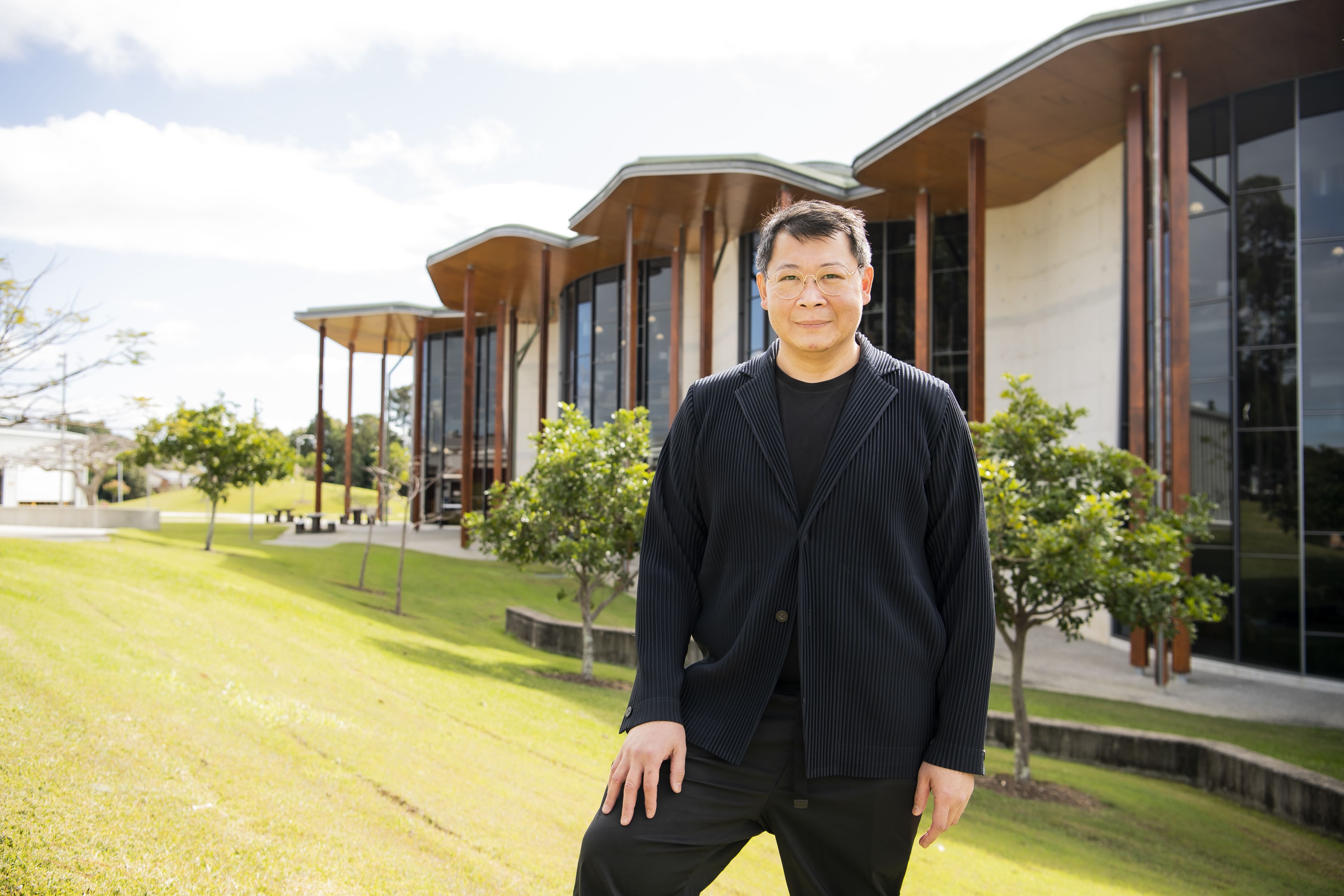
Head of the Abedian School of Architecture, Professor Paul Loh. Picture: Cavan Flynn
Head of the Abedian School of Architecture, Professor Paul Loh. Picture: Cavan Flynn
But Professor Loh says Australia lags behind Japan and Europe in the adoption of robotic construction, particularly when it comes to integrating automation directly on building sites.
“When you put a robot on a building site, it takes away all the protective layers around it - the stable base, the laboratory environment,” Professor Loh says. “We need to build further intelligence into robotic systems so they can sense and read the environment. In other words, giving the robot eyes. My research has been looking at how to build in that sort of feedback and intelligence into the system.”


Original thinking direct to your inbox

Stories from Bond